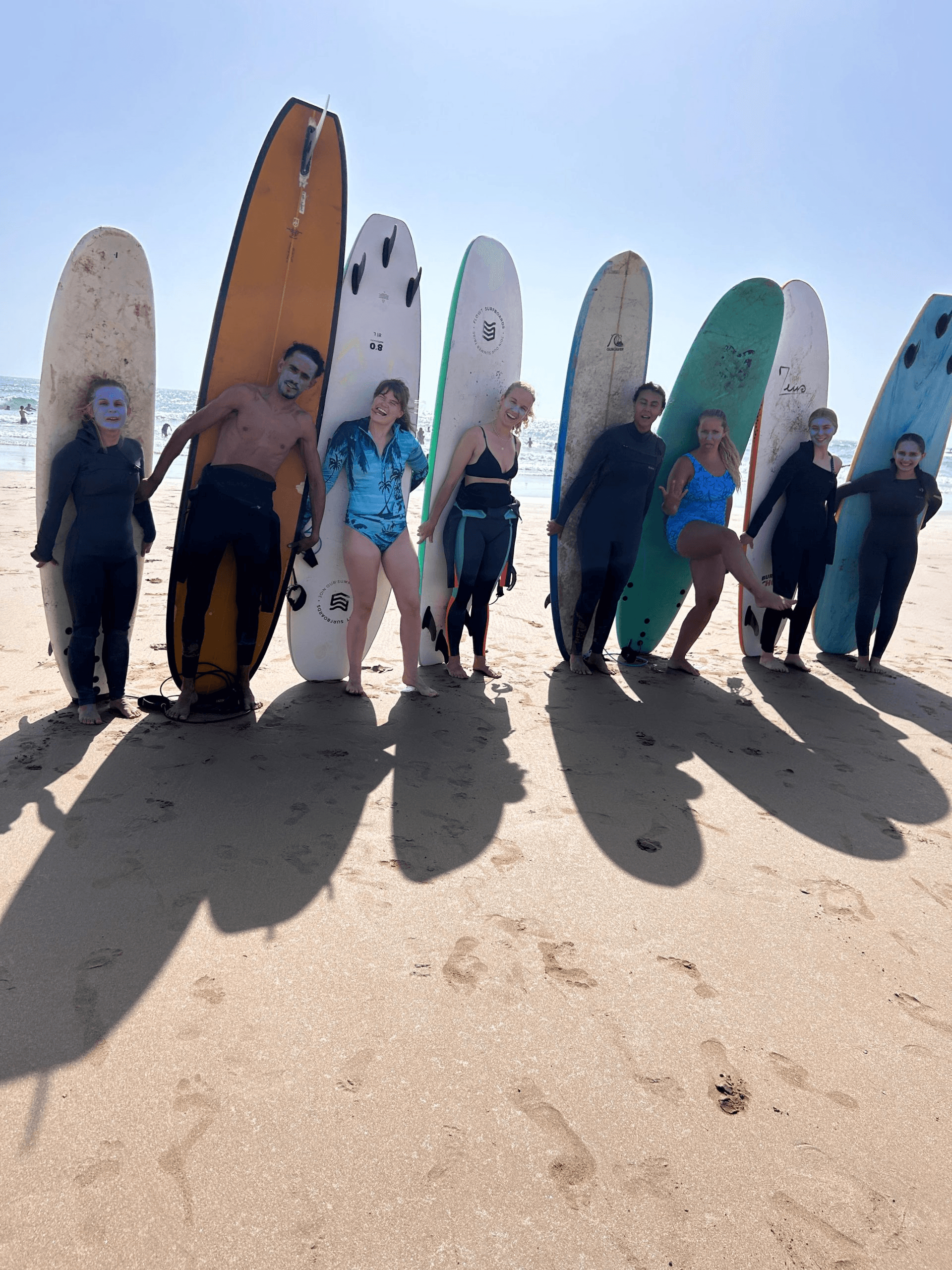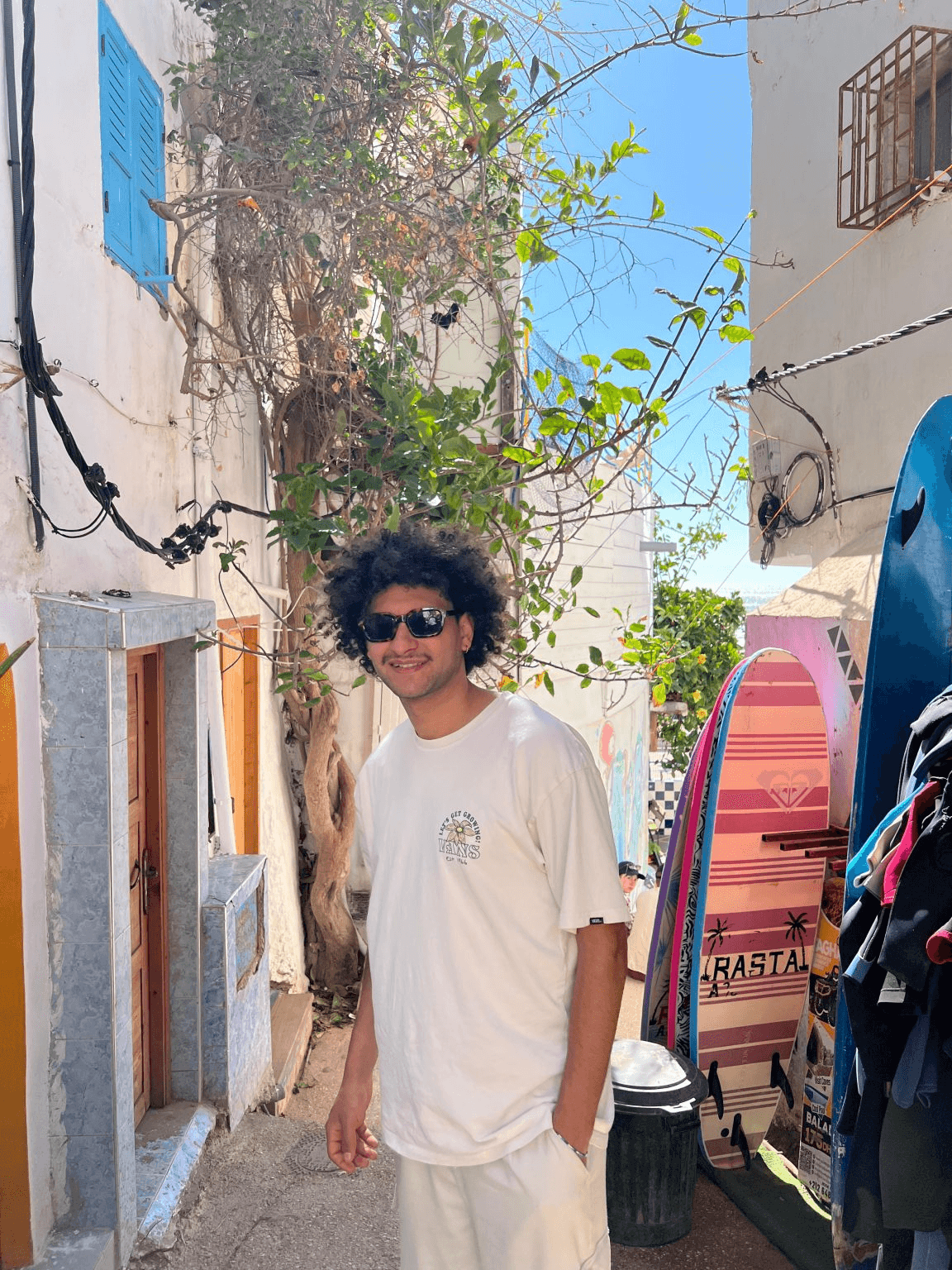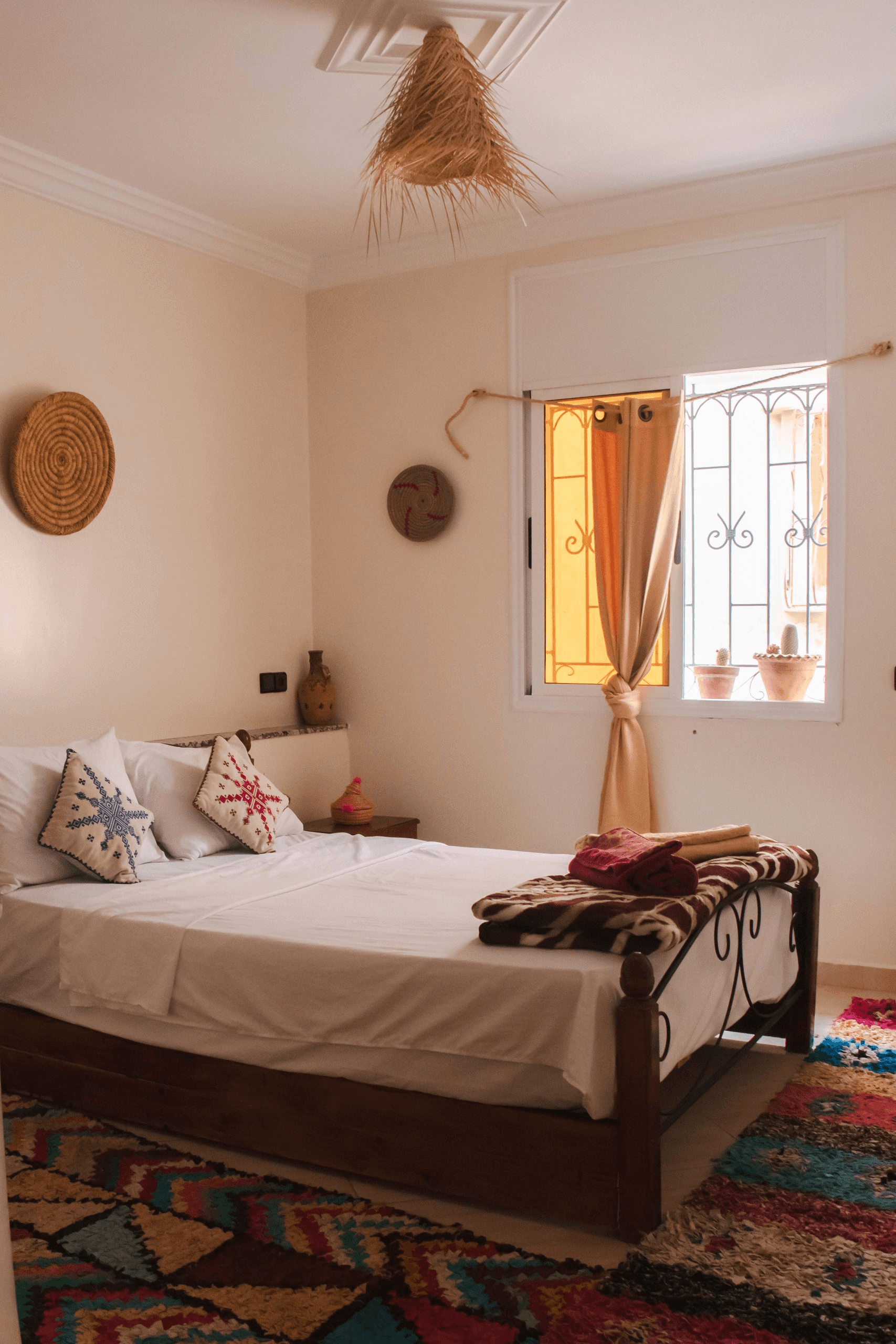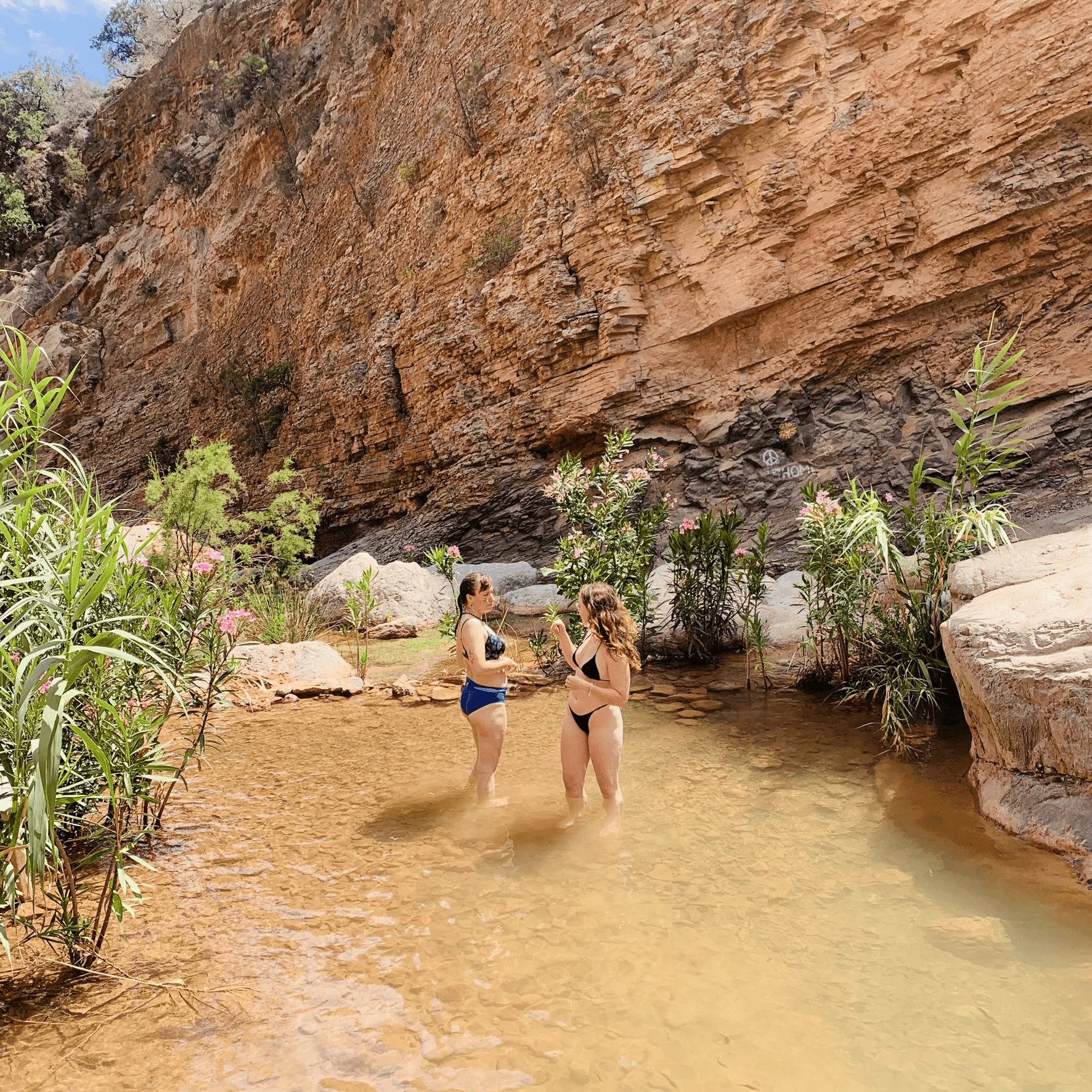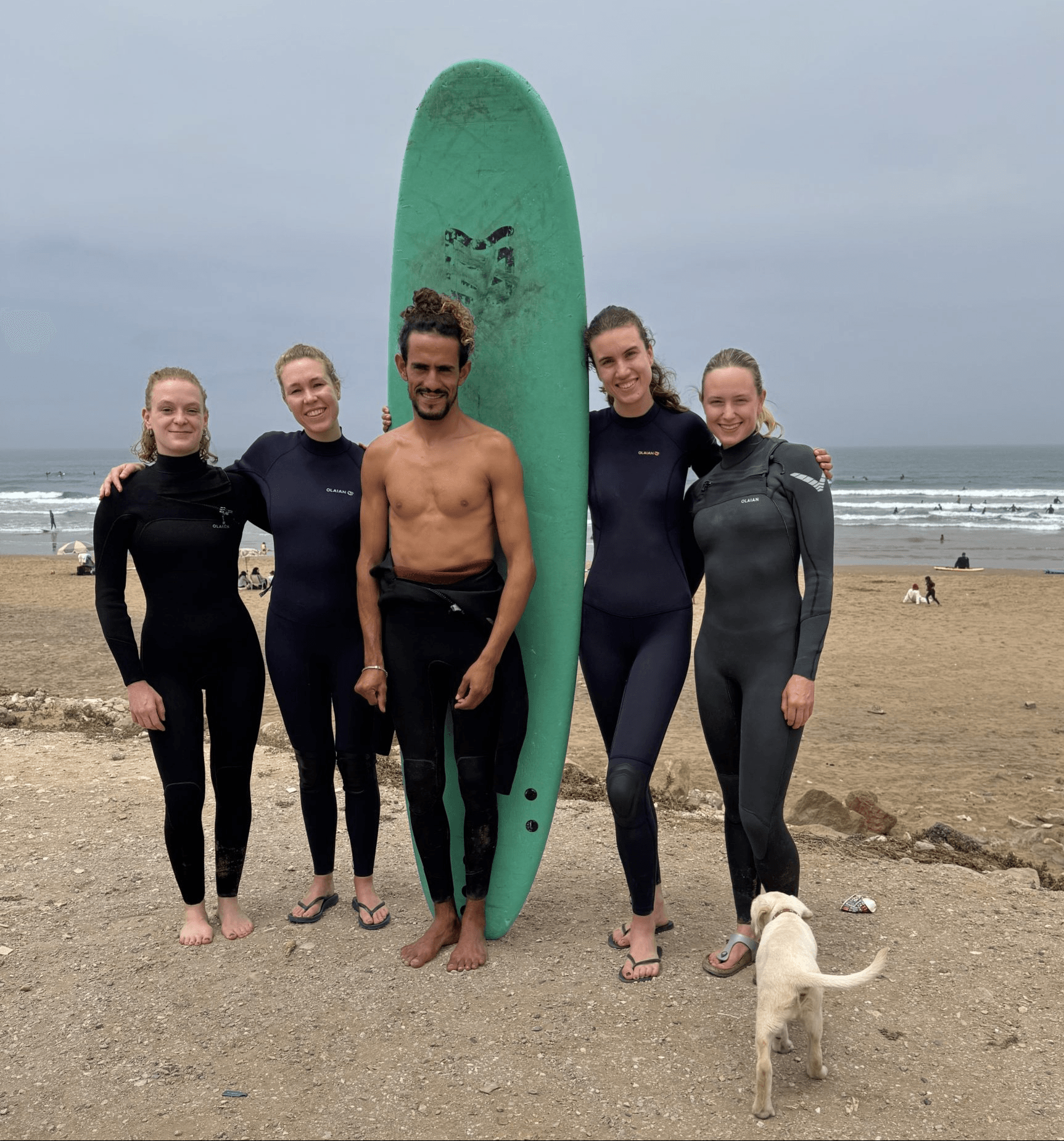
Soft boards, sandy beach breaks and water that stays surfable all year: why the coast around Tamraght is one of the friendliest places to catch your first wave.
Morocco’s Atlantic coast gets swell for most of the year, and the stretch between Agadir and Taghazout mixes world-famous point breaks with mellow, sandy beaches. That combination is exactly what a beginner needs: forgiving waves to learn on today, and somewhere to grow into tomorrow.
Why the coast around Tamraght works for beginners
Learning is mostly about volume — how many waves you can stand up on in a session. Beach breaks with a sandy bottom give you that volume without the consequences of rock or reef. Around Tamraght and Taghazout there are several of them within a short drive of each other, so on most days at least one is the right size.
- Sandy bottoms at the beginner beaches, so falling is part of the fun, not a risk.
- Whitewater that rolls in long and steady, ideal for practising your pop-up.
- Spots facing slightly different directions, so a coach can choose the one that suits the day’s swell and wind.
Your first sessions, step by step
1. Start on a soft-top
Big foam boards are stable, float well and don’t hurt when they hit you. Resist the urge to move to a smaller board too soon — catching more waves on a big board teaches you faster than struggling on a short one.
2. Learn the pop-up on the sand
Most lessons begin on the beach: lying on the board, paddling, then moving from your chest to your feet in one movement. Repeating it on land makes it automatic in the water.
3. Ride the whitewater first
Broken waves are pushed straight to shore, which makes them easier to catch. Once you can stand and steer in the whitewater, your coach will take you out to unbroken ‘green’ waves.
4. Read the ocean before you paddle out
Spend five minutes watching: where the waves break, where the water flows back out, and where other surfers sit. That habit keeps you safe and is how every good surfer starts a session.
What to bring to a lesson
- High-SPF, water-resistant sunscreen — the sun is strong even when the air feels cool.
- Swimwear to wear under the wetsuit and a towel or poncho for changing on the beach.
- Water and a snack: surfing burns more energy than you expect.
If you join a Chill Surfer surf package, surf coaching adapted to your level, board and wetsuit use and transport to selected spots are included on your surf days, so you can arrive with nothing more than your swimwear.
Be patient with yourself
Everyone falls — a lot. Progress in surfing is not a straight line, and a session where you stand up once and laugh about the rest is still a good session. Give yourself several days in a row in the water; that is when things start to click.